What Does EPA 608 Cover for Appliance Techs?
What does EPA 608 cover? Learn refrigerants, equipment, handling rules, and certification types appliance repair technicians need on daily service calls.
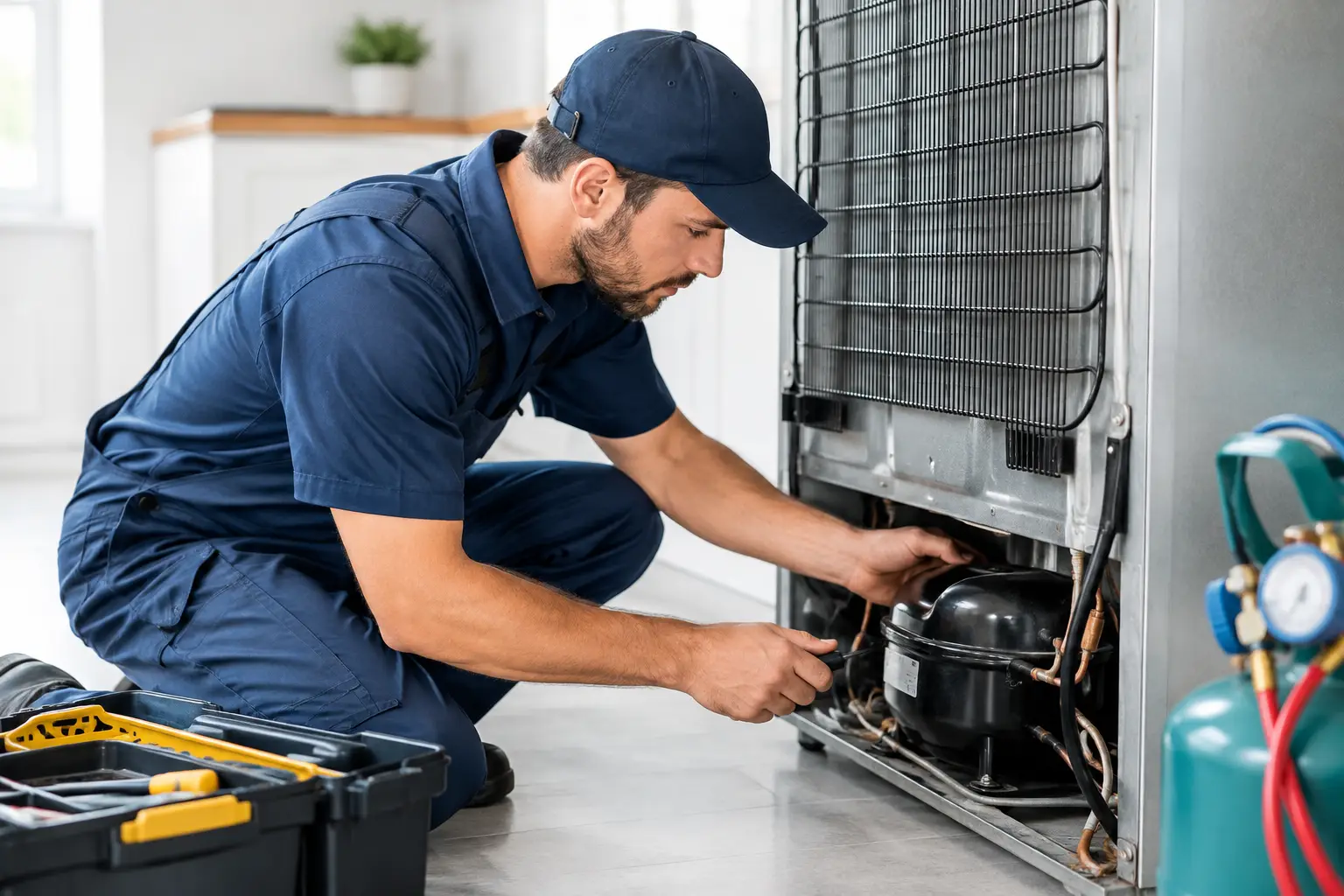
A sealed-system repair can turn from a profitable service call into a compliance problem fast if you do not understand refrigerant rules. So, what does EPA 608 cover? It covers the federal requirements technicians must follow when servicing, repairing, maintaining, or disposing of appliances that contain regulated refrigerants.
For appliance repair technicians, EPA Section 608 certification is not a decorative credential. It is the credential that supports legitimate work on refrigeration systems - from a household refrigerator with a sealed-system issue to a split-system air conditioner. It proves you understand how to recover refrigerant instead of venting it, use the correct equipment, and work within federal handling requirements.
What Does EPA 608 Cover in Day-to-Day Repair Work?
EPA 608 focuses on preventing the release of refrigerants into the atmosphere. That includes ozone-depleting refrigerants such as older CFCs and HCFCs, along with many substitute refrigerants used in modern equipment. The rule applies to appliances and refrigeration equipment, not just commercial HVAC units.
In the field, the coverage is practical. A certified technician needs to know when refrigerant recovery is required, how to connect recovery equipment without creating unnecessary releases, how to use recovery cylinders correctly, and what must happen before an appliance is scrapped or sent for disposal.
The certification also addresses the difference between recovery, recycling, and reclaiming. Recovery means removing refrigerant from equipment and storing it in an external container. Recycling means cleaning refrigerant for reuse through methods such as oil separation and moisture reduction. Reclaiming is a higher standard that returns used refrigerant to specified purity requirements before it can be sold for reuse.
That distinction matters on real jobs. Recovering charge from a failed refrigerator compressor is not the same as reclaiming refrigerant for resale. A technician who understands the workflow can protect the system, avoid contamination, and document the job correctly.
The Four EPA 608 Certification Categories
EPA 608 exams include a Core section and equipment-specific sections. Passing the Core section alone does not authorize a technician to service every type of equipment. The certification category must match the equipment being serviced.
Core Certification
The Core portion covers foundational refrigerant safety and environmental rules. Expect questions on ozone depletion, refrigerant handling, recovery techniques, cylinder safety, shipping, and federal regulations. It also covers the reasons behind the rules. Refrigerant venting is not just poor shop practice. It can create environmental harm, violate federal requirements, and expose a technician or company to serious penalties.
Core knowledge supports every other category. If you are charging, recovering, transporting, or documenting refrigerant work, these fundamentals follow you onto the job.
Type I: Small Appliances
Type I certification covers small appliances that are manufactured, charged, and hermetically sealed with five pounds or less of refrigerant. This is the category most directly connected to many residential appliance repair calls.
Common examples can include household refrigerators, freezers, dehumidifiers, window air conditioners, water coolers, and some compact cooling equipment. A technician diagnosing a restriction, compressor failure, refrigerant leak, or contaminated sealed system in these appliances needs more than a good multimeter. They need the legal and procedural knowledge to recover and handle the refrigerant correctly.
For someone building an appliance repair career, Type I is often the first EPA 608 category to consider. It aligns with refrigerator and freezer sealed-system fundamentals, but it does not cover every cooling system you may encounter.
Type II: High-Pressure Appliances
Type II certification covers high-pressure and very-high-pressure appliances. In practical service work, this often includes residential and light commercial air conditioning, heat pumps, and refrigeration equipment that does not fit under the small-appliance definition.
A central air conditioner may look like a straightforward condenser-and-coil system, but it requires the right certification category, recovery procedures, and pressure awareness. Type II also addresses issues such as leak repair requirements for larger appliances, evacuation standards, and recovery methods for high-pressure refrigerants.
Appliance technicians who plan to expand into ice machines, larger reach-in refrigeration, or HVAC-related service should understand where Type I ends and Type II begins. Do not assume that a small appliance credential covers a larger system just because both systems use a compressor and evaporator.
Type III: Low-Pressure Appliances
Type III certification covers low-pressure appliances, particularly centrifugal chillers. This category is more common in large commercial and industrial settings than in residential appliance repair.
Most new appliance repair technicians will not need Type III for a standard refrigerator, washer, dryer, range, or dishwasher route. Still, it is part of the complete EPA 608 framework. Technicians who want broad commercial opportunities may pursue it as part of Universal certification.
Universal Certification
Universal certification means the technician has passed Core, Type I, Type II, and Type III. It is the most flexible option because it allows work across all three equipment categories.
There is a trade-off. Universal certification demands broader technical knowledge, including equipment types you may not service immediately. But for an entrepreneurial technician, that flexibility can be valuable. You may begin with residential refrigeration and later add commercial refrigeration or HVAC-adjacent work without returning for another EPA category.
What EPA 608 Does Not Cover
EPA 608 is essential, but it is not a complete appliance repair education. It does not teach you how to read every wiring diagram, diagnose a defrost failure, test an inverter compressor board, replace a thermistor, or perform lockout/tagout on a live jobsite.
It also is not a state contractor license, a business license, or proof that you can safely perform electrical diagnostics. Certification confirms refrigerant handling knowledge. Field competence requires a larger workflow: confirm the complaint, verify power and controls, test components, identify the failed system, estimate the repair, document the work, and communicate clearly with the customer.
That distinction protects your reputation. A technician can hold EPA 608 certification and still misdiagnose a refrigerator that has a failed evaporator fan, bad control board, or defrost issue rather than a sealed-system failure. Refrigerant work should be the result of evidence, not a guess based on warm food compartments.
Refrigerant Recovery, Disposal, and Documentation
One major part of what EPA 608 covers is responsible end-of-life handling. Before an appliance containing refrigerant is disposed of, the refrigerant generally must be recovered. This applies whether you are replacing an old refrigerator, removing a failed dehumidifier, or processing equipment for scrap.
Your equipment and records matter. Recovery machines, manifold gauges, vacuum pumps, scales, approved cylinders, and leak-detection tools must be used with discipline. A contaminated cylinder, incorrect refrigerant mix, or missing recovery documentation can create expensive problems for a small business.
For larger systems, leak repair and recordkeeping requirements may apply based on equipment size and refrigerant charge. Requirements can change, and the correct procedure depends on the appliance, refrigerant, and scope of work. A technician should always verify current EPA rules before taking on unfamiliar equipment or a job involving a significant refrigerant leak.
Modern appliances add another layer. Some systems use flammable refrigerants, including hydrocarbons such as R-600a or R-290. These jobs require careful attention to manufacturer procedures, ventilation, ignition sources, approved tools, and charge limits. EPA 608 knowledge supports the refrigerant-handling foundation, but it does not replace model-specific service information or flammable-refrigerant safety training.
Why EPA 608 Builds Better Career Options
EPA 608 certification gives an appliance technician a larger service territory. Without it, you may be limited to electrical, mechanical, and non-sealed-system repairs. With the proper category, you can pursue higher-value refrigerator, freezer, dehumidifier, air-conditioning, and refrigeration calls with a stronger understanding of compliance.
That does not mean every sealed-system repair is worth taking. A wise technician evaluates parts availability, labor time, refrigerant type, customer budget, appliance age, and the probability of a lasting repair. Sometimes the best customer outcome is a documented diagnosis and replacement recommendation. Knowing when not to repair is part of professional field judgment.
For career changers, this is the larger opportunity: stack credentials with repeatable diagnostic skills. Learn electrical testing, refrigeration theory, customer documentation, and business operations alongside EPA 608 rules. That combination makes you more useful to service companies and more capable of building an independent route.
Explore Appliance Repair Academy training for structured, technician-built preparation across major appliance categories, then use the Appliance Repair AI diagnostic app to support faster field diagnostics, wiring references, error-code research, and customer-ready reporting. The goal is not simply to pass a test. It is to show up prepared for the job that follows.
Keep reading
How to Become an Appliance Repair Technician
Read moreAppliance Repair Certifications
Read moreAppliance Repair Technician Salary
Read moreLearn this the repeatable way
The Appliance Repair Academy is a 12 week online certification taught by a working technician. Tuition is $949 and covers laundry, refrigeration, cooking, and dishwasher systems, with the Appliance Repair AI diagnostic app included for a full year.
Explore the program