How to Start an Appliance Repair Business
Learn how to start an appliance repair business with field-ready training, pricing, tools, workflows, and a practical plan for your first paid jobs today.
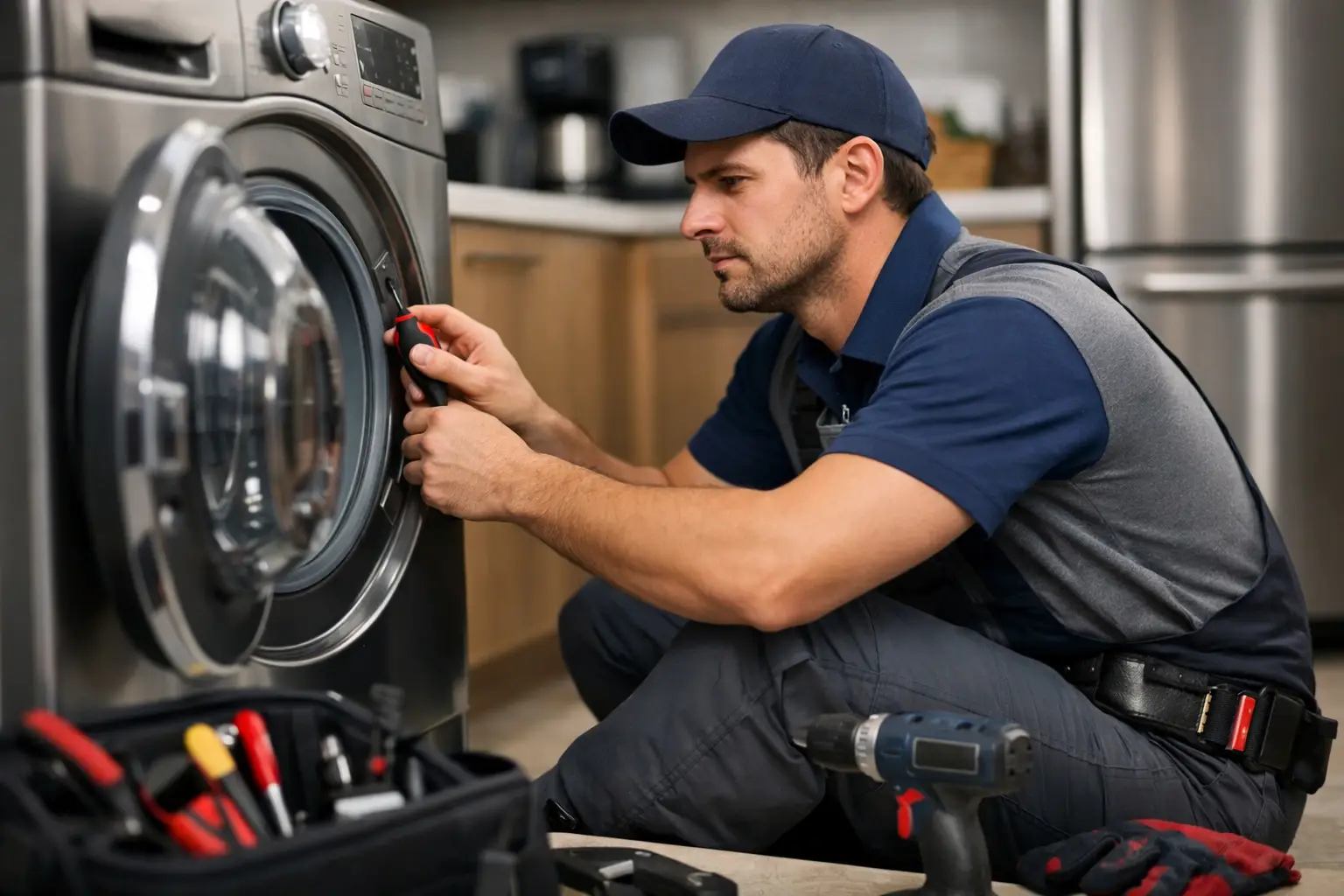
A refrigerator that will not cool, a dryer that will not heat, and a dishwasher flashing an error code are not problems customers can postpone for long. That urgency is why people who start an appliance repair business can build a practical, local service operation around work that households and property managers already need. But the opportunity only works when you can diagnose safely, quote clearly, and complete repairs without turning every call into an expensive return visit.
Appliance repair is not a shortcut business. You are working around live voltage, gas connections, sharp sheet metal, high-temperature components, capacitors, water, and sometimes sealed refrigeration systems. The good news is that a disciplined startup plan can take a career changer from electrical fundamentals to paid diagnostic calls without guessing your way through the trade.
Start With Technical Readiness, Not a Logo
The first asset in an appliance repair company is not a wrapped van or a polished website. It is your ability to follow a repeatable diagnostic workflow. Before you accept customer jobs, you need to understand electrical safety, lockout/tagout procedures, multimeter use, component testing, wiring diagrams, and how each appliance system is supposed to operate.
Start with the appliance categories that create the most common service calls: washers, dryers, refrigerators, ranges, ovens, dishwashers, and microwaves. Each category has its own failure patterns. A no-heat dryer may involve a failed thermal fuse, heating element, power supply issue, airflow restriction, or control problem. A refrigerator that is warm in both compartments may point to an evaporator fan, defrost failure, compressor issue, or a sealed-system concern.
That is why parts-swapping is a bad business model. Replacing components without proving the failure burns cash, damages customer trust, and makes callbacks more likely. Your process should be simple: confirm the complaint, verify power and safety conditions, inspect for obvious mechanical issues, test the relevant circuit or component, document findings, then present a repair recommendation.
Formal training gives new technicians a safer runway than trying to learn only from online videos or job shadowing. A structured program should cover safety, electrical testing, thermistor diagnostics, refrigeration cycles, cooking equipment, customer documentation, and the business side of field service. Scenario-based simulations are especially useful because they force you to make diagnostic decisions before a customer is waiting in the kitchen.
Build the Business Around a Defined Service Area
New owners often lose money by trying to serve an entire metro area from day one. A tighter service radius lowers drive time, fuel costs, and scheduling gaps. Pick several ZIP codes where you can realistically arrive within your promised service window, then expand as your call volume and technician capacity grow.
Decide what you will service before you market. Many new businesses begin with residential laundry, kitchen appliances, and refrigeration diagnostics, then add commercial or specialty work later. High-end built-in units, gas appliances, and sealed-system repairs can raise average ticket value, but they also require more experience, tools, insurance awareness, and, in some cases, specific certifications.
Your service menu should also state what you do not do. For example, you may diagnose a refrigerator cooling issue but refer major sealed-system work until you have the proper equipment and EPA Section 608 certification. Clear boundaries protect your customers and your reputation.
Set Up the Legal and Operational Basics
The exact requirements depend on your state, county, and city. Before taking jobs, verify local business registration, tax registration, licensing rules, permits, and insurance requirements. A sole proprietorship may be enough for a very early operation, while many owners choose an LLC for a clearer business structure. Talk with a qualified local attorney, accountant, or insurance professional when you need advice specific to your situation.
At a minimum, plan for general liability coverage, a separate business bank account, bookkeeping, invoicing, and a way to accept card payments. If you will use a vehicle for work, confirm that your policy covers business use. If you bring on employees, additional workers' compensation, payroll, and labor requirements may apply.
Operational discipline matters just as much. Every job needs a ticket with the customer complaint, appliance model and serial number, observed symptoms, tests performed, parts needed, estimate approval, photos when relevant, and final repair notes. Good records reduce disputes and make future service calls faster.
Buy Tools in the Order the Work Demands
You do not need every specialty tool on day one. You do need reliable basic diagnostic equipment. A quality multimeter, insulated hand tools, nut drivers, screwdrivers, pliers, socket set, drill, flashlight, appliance dolly, clamps, test leads, gloves, and PPE will handle a large share of early calls.
As your work expands, add category-specific tools based on demand. Refrigeration work may require temperature probes, leak-detection equipment, vacuum tools, and recovery equipment. Dryer and vent work can require airflow tools and cleaning gear. The goal is not to collect tools. The goal is to carry equipment that shortens diagnosis time and lets you complete approved repairs professionally.
Parts inventory requires the same restraint. Stock common, low-cost items only after your service data proves they move regularly. Carrying too much inventory ties up cash and leaves you with model-specific parts that may sit on a shelf for months. For many early-stage businesses, fast local sourcing and accurate model-number lookup are more valuable than a crowded van.
Price for Diagnostic Skill and Profit
A low service call fee may get the phone ringing, but it will not sustain a business if travel, administration, insurance, fuel, taxes, and tool replacement consume the revenue. Set a diagnostic fee that pays for the first visit and communicates that you are being hired to identify the actual failure, not merely to show up.
Then establish a consistent labor structure and parts markup policy. Customers do not need a lecture on your overhead, but they do need a clear estimate before repair work begins. Explain the diagnosis in plain language, identify the recommended repair, provide the total, and state whether the diagnostic fee is applied toward the repair. Consistency is more persuasive than improvising prices at every doorstep.
Your first months may require adjustment. Track average ticket, diagnostic-to-repair approval rate, return visits, drive time, parts cost, and unpaid administrative hours. If your schedule stays full but your bank balance does not improve, the problem is usually pricing, route density, callbacks, or too much unpaid time between jobs.
Create a Customer Experience That Produces Repeat Work
Customers remember whether you arrived when promised, protected their floor, explained the issue without talking down to them, and left the work area clean. Those basics generate reviews, referrals, and property-manager relationships more reliably than flashy advertising.
Use appointment windows, text updates, and professional documentation. Before ordering a major part, confirm the model number, verify the diagnosis, check part availability, and set realistic expectations. A technician who says, “I need to test two more components before I quote this,” is more credible than one who guesses quickly.
For early marketing, focus on local visibility and proof of professionalism. Create a business profile where local customers search, ask satisfied customers for honest reviews, and build relationships with real estate agents, landlords, property managers, and independent home-service businesses that do not offer appliance repair. Do not buy broad advertising before you know your ideal service area, average ticket, and capacity.
Use AI as a Field Tool, Not a Substitute for Judgment
AI can reduce time spent searching error codes, identifying parts from photos, organizing job tickets, and turning test results into customer-ready reports. It can also help newer technicians locate relevant wiring references and follow a logical testing sequence. That can be a meaningful advantage when you are standing in front of an unfamiliar model.
But AI does not replace meter readings, visual inspection, safety checks, or technician judgment. Treat it as a force multiplier. You still need to verify model-specific information, confirm electrical conditions, and know when a repair falls outside your current training or equipment.
Appliance Repair Academy combines a 12-week, technician-built training path with more than 80 diagnostic simulations, graded coursework, a 75-question final assessment, instructor support, and a 12-month subscription to the Appliance Repair Assistant AI app. That combination is designed to help students build both repair judgment and the operating habits needed for paid field work.
Take the First Calls With a Repeatable Workflow
When you are ready to start an appliance repair business, do not wait for every detail to feel perfect. Start with a limited service area, appliance categories you can diagnose confidently, and a clean process for booking, inspection, estimates, payment, and follow-up. Grow your capacity after you can consistently deliver a professional first-visit experience.
The long-term opportunity is not just fixing a failed heating element or replacing a drain pump. It is becoming the technician customers call because you diagnose carefully, communicate clearly, and treat every service call like the foundation of a durable local business. Explore Appliance Repair Academy training resources and download the Appliance Repair Assistant AI app to build that field-ready workflow before your first paid job.
Keep reading
Is Appliance Repair Profitable
Read moreHow to Become an Appliance Repair Technician
Read moreAppliance Repair Certifications
Read moreLearn this the repeatable way
The Appliance Repair Academy is a 12 week online certification taught by a working technician. Tuition is $949 and covers laundry, refrigeration, cooking, and dishwasher systems, with the Appliance Repair AI diagnostic app included for a full year.
Explore the program