Can Beginners Repair Appliances Safely at Home?
Can beginners repair appliances safely? Learn limits, essential safety steps, and training habits that turn basic fixes into job-ready skills for work.
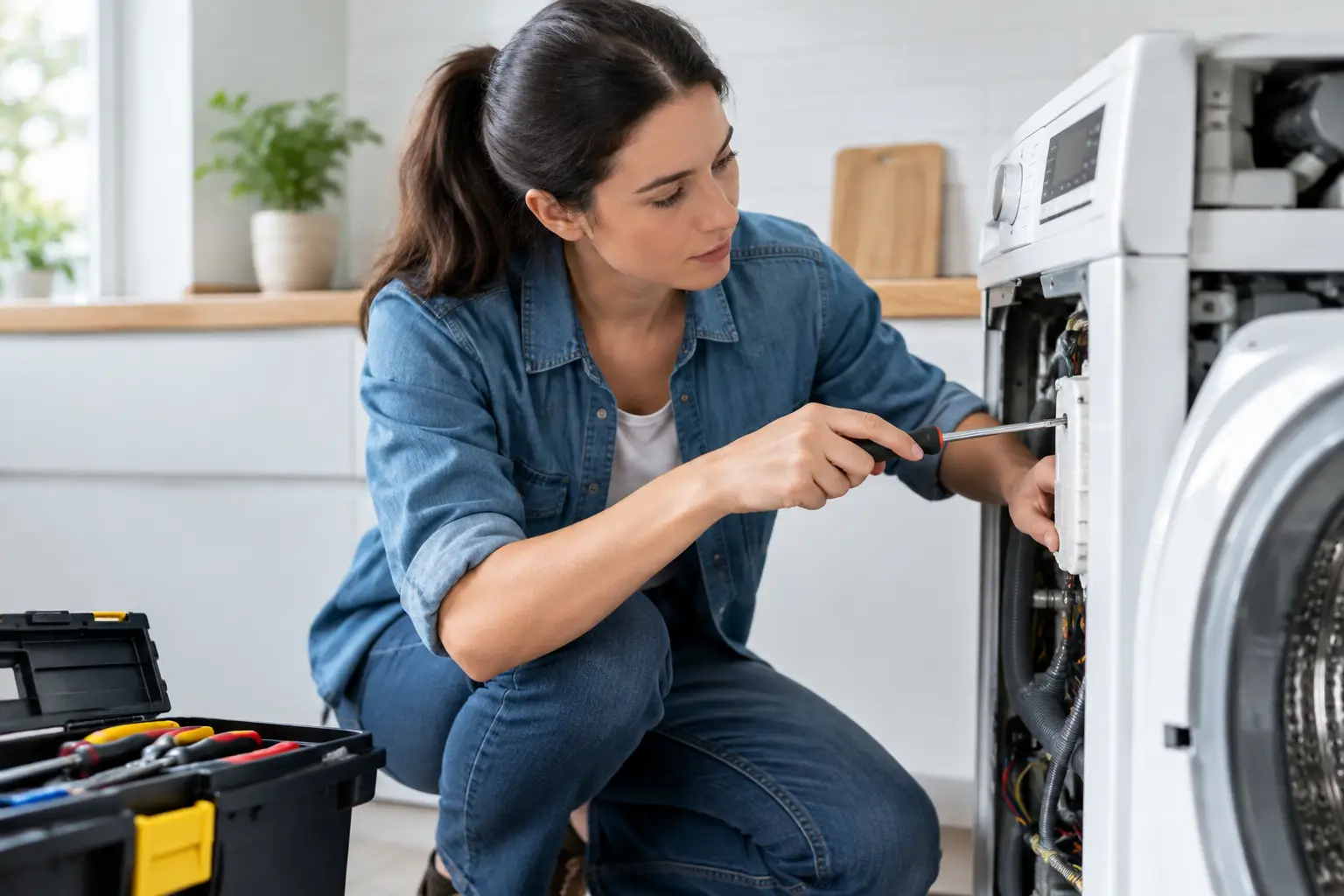
A washer that will not drain or a dryer that suddenly quits is more than a household inconvenience. It is also the kind of service call that can become paid work for someone with real diagnostic skills. But can beginners repair appliances safely? Yes, when they understand their limits, follow a controlled workflow, and know when a repair crosses into high-risk territory.
The goal is not to turn every first-time DIYer into a technician overnight. The goal is to build the habits that professional technicians use: verify the complaint, isolate the energy source, test before touching, document what changed, and stop when the job requires training, equipment, or licensing beyond your current skill level.
Can Beginners Repair Appliances Safely? Start With Scope
Beginners can safely handle many low-risk maintenance tasks and a limited range of basic repairs. Cleaning a dishwasher filter, replacing a refrigerator water filter, clearing a dryer lint path, leveling a washer, inspecting a damaged door gasket, or replacing a known-compatible rack wheel are reasonable starting points. These jobs teach appliance layout, fastener removal, parts identification, and reassembly without asking you to diagnose live electrical circuits or open sealed systems.
The risk rises fast when a repair involves line voltage, stored electrical energy, gas, refrigerant, sharp sheet metal, heavy components, or water near energized parts. A repair may look simple on a video and still carry hazards that are not visible on camera. For example, a microwave can retain dangerous voltage after it is unplugged. A refrigerator sealed-system repair requires specialized tools and refrigerant-handling credentials. A gas range problem can involve combustion, gas leaks, and carbon monoxide risk.
That is not a reason to avoid the trade. It is a reason to learn it in the right order. Professional confidence comes from repeatable process, not from taking bigger risks.
The First Rule: De-Energize and Verify
Unplugging an appliance is a good first step, but it is not the entire safety procedure. A technician needs to control every energy source connected to the machine. That may include 120-volt or 240-volt electrical power, water supply, gas supply, stored mechanical tension, heat, and capacitors.
Use a lockout/tagout mindset even in a home setting. Disconnect the appliance from power, prevent someone else from reconnecting it while you work, and verify that power is absent before reaching into the cabinet. On hardwired equipment, that means shutting off the correct breaker and confirming the circuit is dead with an appropriate meter. Guessing based on a breaker label is not verification.
A multimeter is one of the most valuable tools in appliance repair, but only when you know how to use it. Beginners should first learn meter categories, lead placement, voltage settings, continuity testing, resistance testing, and the difference between testing a disconnected component and probing a live circuit. A meter used incorrectly can create a short, damage the appliance, or put the user in danger.
What Makes an Appliance Repair a Stop-and-Escalate Job
A capable entry-level technician does not say yes to every job. They identify the work that requires a higher level of training or a licensed specialist. Stop and escalate when you encounter a gas odor, damaged gas piping, evidence of combustion problems, a sealed refrigerant system, a swollen or leaking battery, burned wiring, melted terminals, repeated breaker trips, or significant water damage around electrical components.
Microwave work deserves special caution. Even with the plug removed, the high-voltage capacitor can hold a dangerous charge. Do not open a microwave cabinet as a beginner just to “see what is wrong.” Learn the safety theory and proper discharge procedures through structured instruction before performing internal microwave diagnostics.
The same principle applies to refrigeration. You can safely clean condenser airflow areas, check door seals, and inspect a drain path with power disconnected. But low cooling complaints can involve thermistor diagnostics, compressor start components, control boards, airflow failures, or sealed-system faults. Refrigerant recovery, charging, leak repair, and compressor replacement are not beginner tasks.
Build a Diagnostic Workflow Before You Replace Parts
The most expensive beginner mistake is parts swapping. A washer that will not spin may have a lid-lock issue, a drainage problem, an out-of-balance condition, a failed actuator, a wiring fault, or a control issue. Replacing the first part mentioned in a search result is not diagnosis.
Start with the customer complaint and the appliance model number. Confirm the symptom, check for error codes, inspect for obvious damage, and ask what happened immediately before the failure. Did the dishwasher stop mid-cycle? Did the dryer become noisy before it stopped heating? Did the refrigerator’s cooling issue begin after a power outage? Those details narrow the diagnostic path.
Then work from simple causes to complex ones. Check installation conditions, connections, filters, drainage, airflow, and mechanical obstructions before moving to electrical tests. If electrical testing is needed, use the wiring diagram and test the circuit with a clear reason for each measurement. A professional diagnostic result is not “the part looked bad.” It is a documented conclusion supported by a symptom, test result, and repair decision.
That workflow matters whether you are fixing your own machine or preparing for service work. Customers pay technicians for certainty, not for a bag of guesses.
Safe Beginner Repairs That Build Useful Skills
The best first projects are controlled jobs with a clear procedure, an accessible replacement part, and limited exposure to hazardous systems. Start with maintenance-oriented work, then progress toward component access and basic mechanical replacements.
Good early projects include cleaning a dryer vent path, replacing worn washer hoses, clearing a dishwasher filter and spray-arm obstruction, replacing refrigerator door bins or shelves, installing an oven rack support, changing a water filter, or replacing a damaged appliance leveling foot. Each task reinforces habits that matter on larger jobs: photographing wire and hose routing, organizing screws, checking part numbers, inspecting for secondary damage, and testing operation after reassembly.
Even on these jobs, treat the appliance with respect. Sheet-metal cabinet edges can cut hands. A front-load washer is heavy and unstable when moved incorrectly. A refrigerator water line can leak after a filter change if it is not seated correctly. Use gloves where appropriate, keep the floor dry, and never force a part that does not align naturally.
Training Turns Caution Into Capability
Safety is not just a warning label. It is a skill set built through repetition. A structured training path teaches beginners how to read a wiring diagram, perform safe voltage and resistance tests, identify components, understand fault codes, and follow diagnostic trees across laundry, cooking, dishwashing, and refrigeration equipment.
It also teaches the business-side discipline that separates a hobby repair from a service call: documenting the model and serial number, recording test results, writing a clear customer explanation, sourcing the correct part, and knowing when a repair is not economically practical. That is how a new technician protects the customer, the appliance, and their own reputation.
At Appliance Repair Academy, the 12-week curriculum starts with safety, tools, electrical fundamentals, and diagnostic workflows before moving into appliance categories such as laundry, refrigeration, cooking equipment, microwaves, and dishwashers. Students work through more than 80 scenario-based simulations, graded coursework, and a final certification assessment. The training is designed to produce technicians who can think through a call, not just follow a repair clip.
AI can strengthen that process when it is used as a field tool rather than a substitute for judgment. Photo-based fault identification, error-code references, wiring support, multimeter guidance, and customer-ready job documentation can help a new technician stay organized on real service calls. The technician still owns the safety decision and the final diagnosis.
A Safer Path to Paid Appliance Repair Work
If you are considering appliance repair as a career, do not measure readiness by whether you can take apart a dryer on your kitchen floor. Measure it by whether you can identify hazards, isolate power, read service information, test a component correctly, explain your findings, and know when to stop.
That standard protects you early in your training and builds the kind of credibility that leads to repeat customers, service-company opportunities, and eventually an independent repair business. Explore the Academy content on its website, and download the companion AI-powered diagnostic app to practice a more disciplined, technician-first workflow. The safest repair is not the one completed fastest. It is the one completed with evidence, control, and the judgment to earn the next call.
Keep reading
How to Become an Appliance Repair Technician
Read moreAppliance Repair Certifications
Read moreAppliance Repair Technician Salary
Read moreLearn this the repeatable way
The Appliance Repair Academy is a 12 week online certification taught by a working technician. Tuition is $949 and covers laundry, refrigeration, cooking, and dishwasher systems, with the Appliance Repair AI diagnostic app included for a full year.
Explore the program