Best PPE for Appliance Technicians on Service Calls
Learn which PPE appliance technicians need for electrical, refrigerant, sharp-metal, and microwave hazards - and how to build a field-ready kit safely.
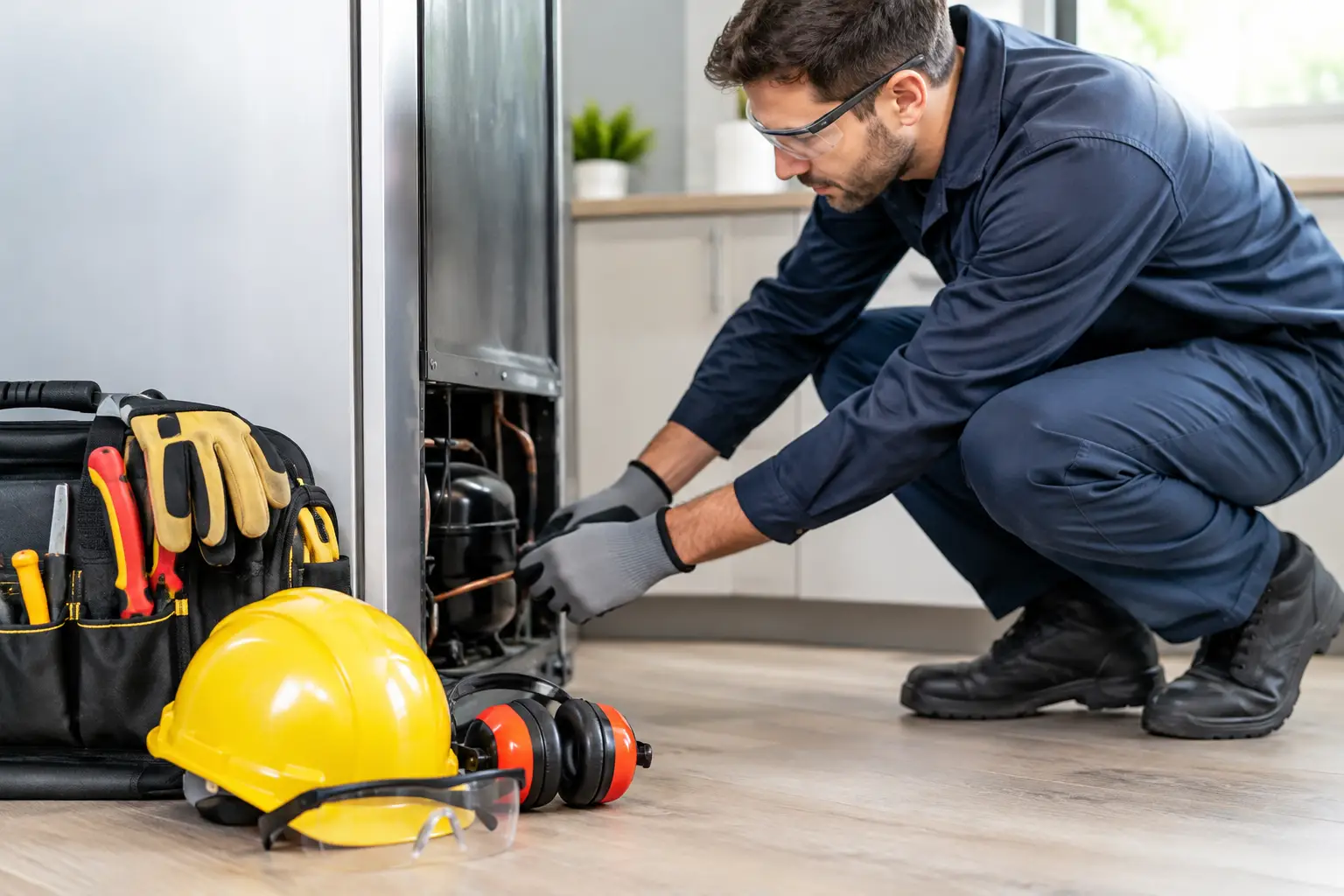
A washer cabinet can slice a hand. A microwave can retain a dangerous electrical charge. A refrigerator sealed-system repair can put you around pressurized refrigerant and hot tubing. The best PPE appliance technicians use is not a generic box of safety gear. It is a job-specific system that supports safe diagnostics, protects the customer’s home, and keeps a small mistake from becoming a career-ending injury.
PPE is not a substitute for de-energizing equipment, verifying voltage, following lockout/tagout procedures, or knowing when a repair is outside your current scope. It is the final protective layer after the technician has controlled the hazard. That distinction matters. Gloves do not make live electrical work safe, and safety glasses do not replace a proper recovery process. A professional technician uses every layer.
Best PPE for Appliance Technicians Starts With Hazard Control
Appliance repair is not one risk repeated across every call. You may begin the morning diagnosing a dishwasher leak under a sink, then troubleshoot a 240-volt dryer, then inspect a refrigerator with a compressor issue. The right PPE changes with the equipment, task, workspace, and condition of the unit.
Before reaching for a tool, inspect the job. Is there standing water near an energized appliance? Is the floor cluttered? Does the customer have pets or children nearby? Is the unit greasy, moldy, sharp-edged, or visibly heat-damaged? A quick risk scan gives you time to control what you can before pulling panels.
Your primary controls are operational: unplug the appliance or shut off the breaker, confirm the circuit state with an appropriate meter, close water or gas supply when the repair requires it, and secure the work area. PPE then covers the remaining exposure, such as sharp sheet metal, flying debris, chemical contact, and incidental fluid exposure.
Build a Field-Ready PPE Kit
A serious technician does not need to wear every item in the bag on every service call. Overusing PPE can create its own problems. Bulky gloves can reduce dexterity during meter work, and the wrong glove material can get caught around moving components. Build a compact kit, then select gear based on the work in front of you.
Safety glasses are everyday equipment
ANSI-rated safety glasses should be standard equipment for opening appliances, vacuuming debris, using compressed air where appropriate, working around corroded fasteners, or inspecting overhead cabinet installations. Clear lenses work well for most indoor calls. If you frequently move between outdoor condenser work and bright garages, anti-fog options and a second tinted pair can be worthwhile.
Eye protection matters even on seemingly routine repairs. A spring-loaded door component, a brittle plastic clip, or debris shaken loose from a dryer blower housing can become a fast-moving hazard. If you wear prescription glasses, use approved over-glasses or prescription safety eyewear rather than assuming regular lenses offer enough protection.
Gloves need to match the task
Cut-resistant work gloves are valuable when removing washer cabinets, handling dryer drums, reaching around evaporator covers, and dealing with stamped steel edges. Look for gloves that balance cut resistance with enough fingertip control to handle screws and connectors. Keep multiple pairs in the truck because gloves that are wet, oily, or contaminated should not follow you into the next customer’s home.
For electrical diagnosis, do not confuse ordinary work gloves with electrical protective gloves. Standard mechanic or cut-resistant gloves are not rated to protect you from electrical shock. The correct process is de-energize, verify, and only perform energized testing when it is necessary, trained for, and controlled. Electrical-rated gloves require proper selection, inspection, testing, and use. They are specialized equipment, not a casual add-on.
Nitrile disposable gloves earn their place on calls involving drain water, food residue, moldy buildup, grease, or chemical cleaners. They also protect your hands and help prevent transferring grime to a customer’s counters or flooring. Use them as a barrier for contamination, not as protection from sharp metal or live circuits.
Footwear protects more than toes
Closed-toe, slip-resistant work boots or shoes are a baseline for field service. Appliance work often happens in laundry rooms with wet floors, cramped kitchens, garages, basements, and uneven exterior paths. Good traction reduces falls when you are moving a heavy range or pulling a refrigerator away from a wall.
Toe protection can make sense when your work regularly includes moving large appliances, but fit and mobility matter. A boot that is too heavy or uncomfortable can lead to fatigue on a long route. Choose footwear you can wear for full days while still maintaining stable footing and control around dollies, stairs, and tight doorways.
Respiratory and hearing protection are situational
Most appliance repairs do not require a respirator. Some do create airborne dust, insulation particles, odors, or cleaning-chemical exposure. A properly fitted respirator may be appropriate for a specific exposure, but it is not a cure-all. If a workspace has suspected mold, heavy contamination, poor ventilation, or unknown fumes, pause and assess whether the job should proceed, be cleaned first, or be referred out.
Hearing protection is also task-dependent. It can be useful around repeated loud shop tasks, drilling, or equipment testing in confined mechanical spaces. On a normal customer visit, you still need to hear changes in a compressor, blower, motor, or water valve. Do not block out diagnostic information just because hearing protection is available.
Refrigerant and brazing work require a higher standard
Sealed-system work is a separate category of risk. Refrigerant can cause cold burns, and service procedures involve pressurized systems, recovery equipment, vacuum pumps, hot surfaces, and potentially brazing or soldering operations. This work demands safety glasses, appropriate gloves, task-specific clothing, ventilation awareness, and disciplined equipment handling.
The bigger point is competency. PPE does not qualify someone to open a sealed system. Before taking on refrigeration repairs, technicians need sealed-system fundamentals, refrigerant handling training, the correct recovery process, and an understanding of the tools involved. A career grows faster when you know which jobs you can safely complete today and which ones require more training first.
PPE Rules for Electrical and Microwave Diagnostics
Electrical safety deserves its own workflow because appliance technicians regularly work with line voltage, damaged wiring, capacitors, and multi-meter testing. Start by identifying the power source. Unplugging a unit is usually best, but some appliances are hardwired or connected through inaccessible outlets. Know where the disconnect or breaker is, shut it off when needed, and verify before touching conductors.
Use a properly rated multimeter and leads in good condition. Inspect the insulation, probes, and meter case before the job. Keep hands behind probe guards, avoid working in wet conditions, remove metal jewelry, and maintain controlled body positioning. If you cannot access the circuit safely, stop rather than stretching around energized components.
Microwave repair requires even more caution. High-voltage capacitors can retain energy after the appliance is unplugged. PPE is only one part of the equation. Technicians need a defined discharge procedure, correct tools, and training on microwave high-voltage systems before opening that section of the unit. There is no income upside to guessing around stored energy.
Protect the Customer’s Home, Too
Field-ready PPE includes equipment that protects the jobsite: shoe covers, floor runners, moving blankets, and gloves clean enough to touch a customer’s appliance without leaving grease behind. This may not sound like safety gear, but it is part of professional risk control. Preventing a scratched floor, contaminated countertop, or damaged door frame protects your reputation and your profit.
Document what you find before moving a unit. Photograph pre-existing damage when appropriate, note water leaks and flooring concerns, and explain the work area to the customer. A technician who works cleanly and communicates clearly is easier to trust, easier to refer, and better positioned to build repeat business.
Train the Workflow, Not Just the Gear
The best PPE for appliance technicians becomes effective when it is part of a repeatable diagnostic routine: assess the hazard, isolate energy, verify the condition, select PPE, diagnose, repair, test, and document the result. That process protects you while producing cleaner, more defensible service calls.
At Appliance Repair Academy, students learn safety, electrical testing, refrigeration, laundry, cooking, dishwashers, microwaves, diagnostics, and customer documentation in a structured 12-week path. The goal is not to memorize parts. It is to build the judgment that helps you arrive prepared, work safely, and leave with a repair the customer can understand.
Your gear bag should make you safer, but your process is what makes you employable. Explore Academy training content through the Appliance Repair Academy website, and use the companion Appliance Repair Assistant AI app download page to support field diagnostics alongside hands-on skill development.
Keep reading
How to Become an Appliance Repair Technician
Read moreAppliance Repair Certifications
Read moreAppliance Repair Technician Salary
Read moreLearn this the repeatable way
The Appliance Repair Academy is a 12 week online certification taught by a working technician. Tuition is $949 and covers laundry, refrigeration, cooking, and dishwasher systems, with the Appliance Repair AI diagnostic app included for a full year.
Explore the program