Are Appliance Repairs Recession Proof? The Reality
Are appliance repairs recession proof? See why repair demand can hold up in downturns, where the risks are, and how technicians build resilient income.
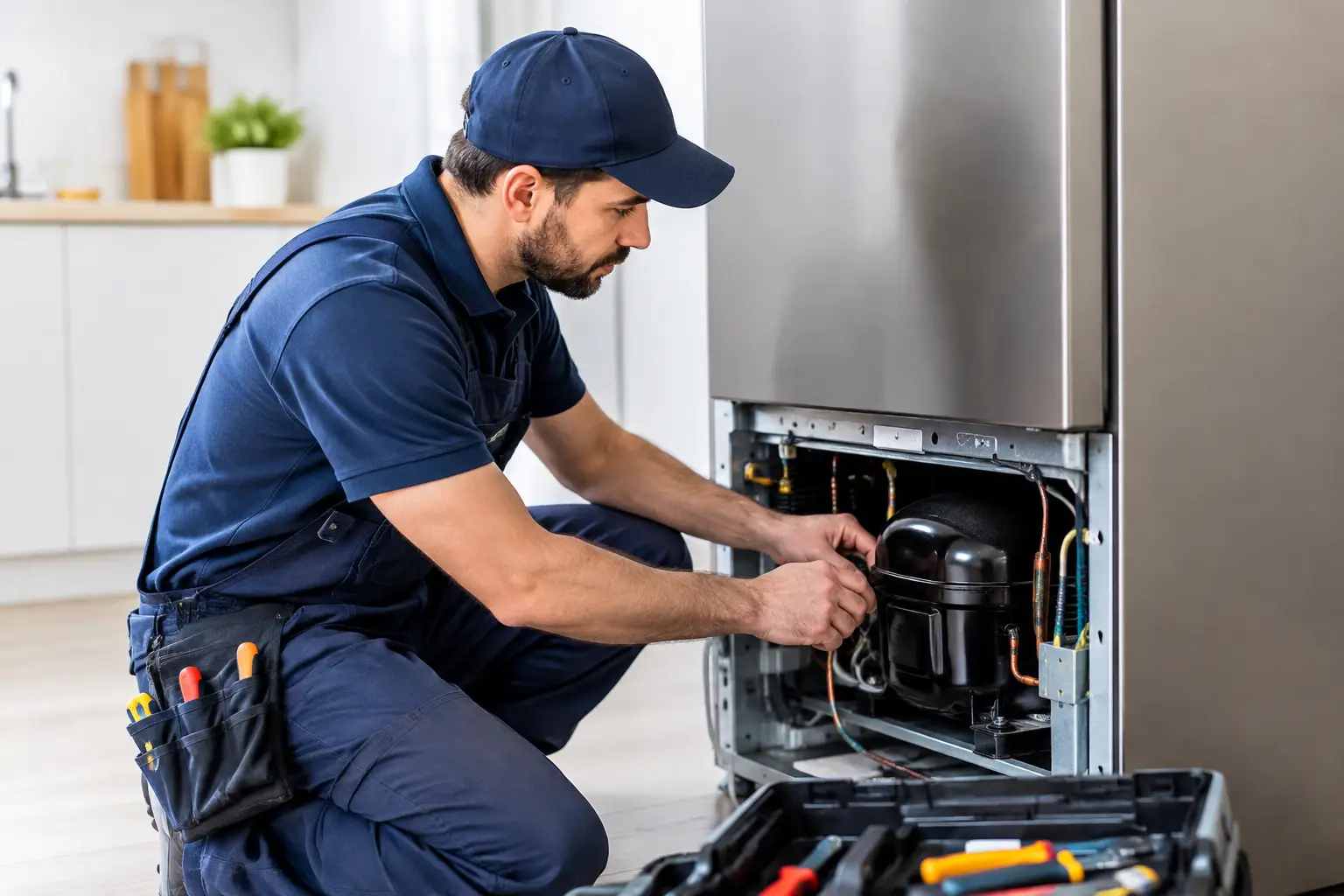
When a washer stops draining or a refrigerator stops cooling, most households do not view the repair as optional. That is why people asking, “are appliance repairs recession proof,” are asking a smart career question. Appliance repair is not immune to economic downturns, but it serves a need that often becomes more valuable when consumers are watching every dollar.
For someone choosing a hands-on career, that distinction matters. A recession can reduce discretionary spending, slow large purchases, and make customers hesitate. It can also push those same customers to repair a six-year-old refrigerator instead of replacing it, or fix a dryer for a few hundred dollars instead of financing a new laundry set.
Are Appliance Repairs Recession Proof?
The accurate answer is: not completely, but appliance repair can be highly recession-resistant.
No service business is guaranteed work in every market. A severe downturn may reduce customer approvals, increase price shopping, and delay nonessential maintenance. Independent technicians can also face tighter margins if they do not price labor, parts, travel, and callbacks correctly.
But appliance repair is built around essential equipment. Refrigerators protect food. Washers and dryers support daily household routines. Ranges, ovens, dishwashers, and microwaves affect how families prepare meals and manage time. When these machines fail, the customer needs a clear diagnosis and a workable decision fast.
That creates demand that is different from demand for luxury upgrades. A homeowner may postpone a kitchen remodel. They are far less likely to ignore a refrigerator that is warming up or a washer that is flooding the laundry room.
Why Repair Can Gain Ground During a Downturn
Recessions change customer behavior. They do not eliminate appliance failures.
When budgets tighten, replacement purchases become harder to justify. Even if a customer wants a new appliance, they may face higher prices, delivery costs, installation fees, haul-away charges, and financing concerns. A successful repair can be the lower-cost path that keeps the household running.
This is especially true when the diagnosis identifies a contained failure: a worn drain pump, failed door lock, bad igniter, damaged inlet valve, defective thermistor, or a control issue with a reasonable repair cost. The technician's job is not to pressure every customer into repair. It is to accurately explain the failure, verify the repair path, and give the customer enough information to make a sound decision.
That process builds trust. In a tougher economy, customers remember the technician who arrived prepared, tested the unit correctly, documented the issue, and avoided selling parts by guesswork.
The repair-versus-replace calculation
A technician cannot promise that every unit is worth fixing. Appliance age, model reliability, parts availability, repair cost, and the condition of major systems all matter.
A relatively new washer with a failed latch assembly may be a straightforward repair. A refrigerator with a sealed-system failure can be more complex. The customer needs a clear explanation of the likely cost, the condition of the compressor and cooling system, and whether replacement makes more financial sense.
This is why diagnostic skill matters more than swapping parts. A technician who can read the wiring diagram, use a multimeter safely, test voltage under load, and isolate a failed component can create real value in any economy.
What Actually Makes a Repair Career Resilient
The most durable appliance repair careers are not built on the claim that work is automatic. They are built on broad technical capability and a disciplined field workflow.
A technician who only handles one type of job is more exposed to slow periods. A technician who can service laundry appliances, refrigerators, cooking equipment, dishwashers, and microwaves can respond to a wider range of customer calls. Cross-category knowledge gives a service company more scheduling flexibility and gives an independent operator more ways to fill the route.
Strong technicians also reduce expensive repeat visits. They start with safety and the customer complaint, confirm the symptom, inspect for obvious mechanical issues, check error codes, and follow the diagnostic path. They use lockout/tagout where appropriate, verify power supply conditions, test components, and document findings before recommending a repair.
That workflow protects profit. In a slower economy, a business cannot afford unnecessary parts orders, vague job notes, or callbacks caused by incomplete testing.
Skills that support steadier demand
The field rewards technicians who can handle both common failures and more technical calls. Valuable capabilities include electrical fundamentals, multimeter use, wiring-diagram interpretation, thermistor diagnostics, motor and pump testing, gas and electric cooking diagnostics, and sealed system fundamentals.
Customer communication is just as operationally important. A clear job ticket, photo documentation, itemized estimate, and customer-ready report reduce confusion. They also make the service feel professional, especially when a customer is weighing a repair against a replacement.
AI can help speed up reference work, error-code research, and documentation, but it does not replace hands-on verification. A photo-based fault suggestion is useful only when the technician confirms the diagnosis with the right tests. The tool is a force multiplier, not a substitute for electrical safety, mechanical judgment, or field experience.
The Risks Technicians Should Plan For
Calling appliance repair recession-resistant does not mean ignoring business risk. Customers may approve fewer high-dollar repairs. Parts delays can stretch jobs. Some manufacturers limit access to technical information or parts. Competition can also increase as more service providers chase the same calls.
The answer is to operate with discipline. Keep labor pricing based on real costs. Build a service area that does not waste hours in drive time. Use deposits or authorization procedures for special-order parts. Track callback patterns. Maintain clear customer documentation so the approved scope of work is not disputed later.
For independent owners, diversification helps. Residential repair may be the core service, while property managers, landlords, small multifamily operators, and warranty work can create additional volume. Each channel has trade-offs. Property management work may offer repeat business but lower rates or slower payment terms. Warranty work can supply leads but often brings administrative requirements and tighter reimbursement structures.
A resilient business does not say yes to every low-margin opportunity. It knows which job types, neighborhoods, appliance categories, and referral sources produce profitable work.
A Career Path With Multiple Economic Options
Appliance repair offers more than one way to earn. Some technicians join established service companies and focus on field production, learning dispatch systems, parts processes, and customer-facing diagnostics. Others build an independent operation with a service vehicle, scheduling workflow, local marketing, and repeat customers.
That flexibility matters during uncertain economic periods. If one company cuts hours, a technician with verified skills can pursue another service role, take on approved side work where permitted, or develop a small customer base. The trade provides a practical service people need, along with the possibility of business ownership.
The entry point should still be structured. Watching scattered videos may show a repair, but it rarely teaches the full workflow: safety, electrical theory, symptom verification, diagnostic sequencing, repair documentation, customer communication, and post-repair testing. Those are the habits that turn technical knowledge into paid, repeatable work.
A structured 12-week training path can give new technicians a foundation across major appliance categories while building the confidence to approach real service calls methodically. Scenario-based practice matters because field work is rarely a clean, single-symptom problem. A customer may report that the dryer will not heat, while the actual issue involves supply voltage, airflow restrictions, a thermal fuse, or an operating condition that has not been identified yet.
The Better Question to Ask
Instead of asking whether appliance repair is perfectly recession proof, ask whether it solves problems customers still have to address when money is tight. In most communities, the answer is yes.
Demand is strongest for technicians who can diagnose accurately, communicate honestly, and run jobs efficiently. Economic uncertainty can make customers more careful, but it also makes a trustworthy repair option more valuable.
If you want a career built around practical diagnostics, service calls, and a path toward ownership, explore Appliance Repair Academy content and download the companion Appliance Repair Assistant AI app to see how structured training and field-ready tools work together.
Keep reading
How to Become an Appliance Repair Technician
Read moreAppliance Repair Certifications
Read moreAppliance Repair Technician Salary
Read moreLearn this the repeatable way
The Appliance Repair Academy is a 12 week online certification taught by a working technician. Tuition is $949 and covers laundry, refrigeration, cooking, and dishwasher systems, with the Appliance Repair AI diagnostic app included for a full year.
Explore the program